- November 18, 2026
- Veronika
Cultivating a Designer Point of View
Two creative voices, two different approaches and a shared question: What makes a designer’s point of view genuinely distinctive?
What shapes our taste? How do we distinguish inspiration from imitation? And how do design professionals develop a creative voice that evolves without losing its identity?
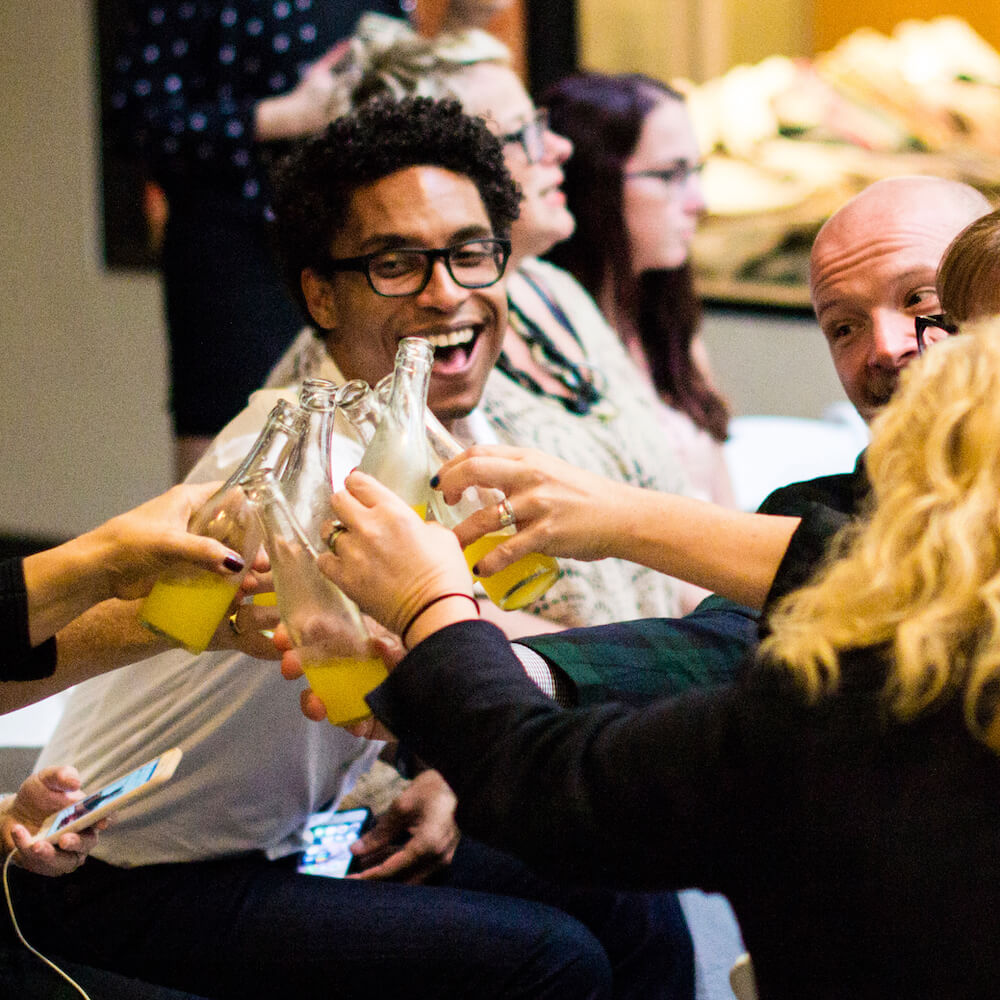
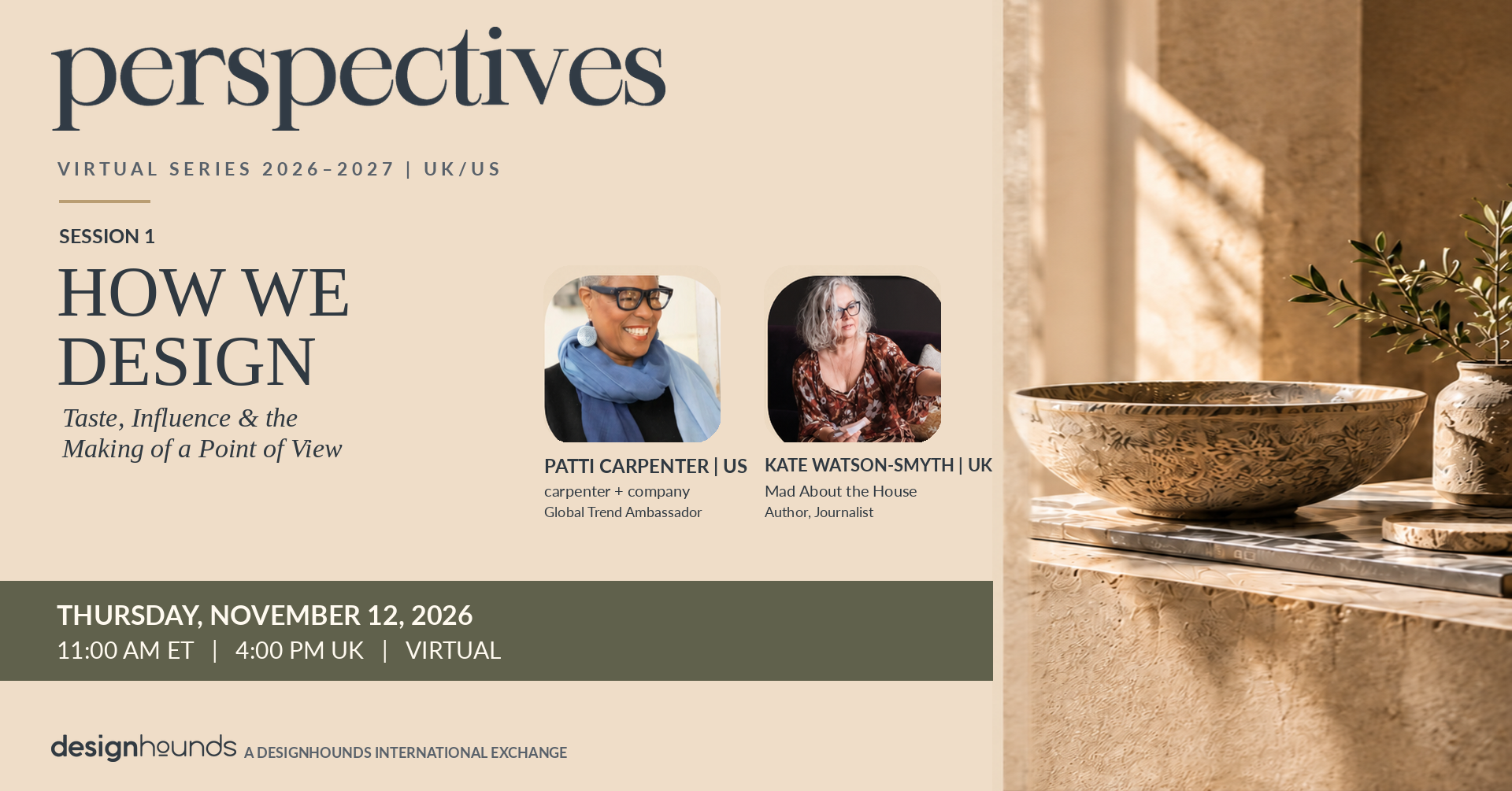
These questions brought together Kate Watson-Smyth (UK), interiors journalist, author and founder of Mad About The House, and Patti Carpenter (US), global trend ambassador, creative director and founder of carpenter + company and over 20 design professionals from the UK and North America for the opening virtual conversation of Designhounds Perspectives UK/US.
Moderated by Designhounds founder Veronika Miller, the conversation explored how observation, experience and professional judgment shape the way we design.
The two speakers approached the subject from different directions, but arrived at a remarkably similar conclusion: a point of view is less about having a recognizable style and more about developing a distinctive way of seeing.
THE UK PERSPECTIVE
Kate Watson-Smyth | Ask Better Questions
Kate’s 25 years as a journalist have shaped her approach to interiors. Her training as a news reporter taught her to ask questions, challenge assumptions and look beyond the obvious. She applies that same investigative approach to understanding how people live.
1. Good taste and good design aren’t the same thing.
Taste is subjective. Good design must go further, addressing form, layout, function and the needs of the people using a space. For Kate, the distinction matters because a successful interior isn’t necessarily one that reflects her personal preferences. It’s one that works for the people who live there.
2. Approach a design brief like a journalist.
Kate uses the familiar questions of journalism to understand clients and their homes. The answers reveal far more than a collection of inspirational images.
Who uses the space? What happens there? When is it used? How should it feel? And perhaps most importantly, why isn’t the existing space working?
3. Collect inspiration. Don’t simply reproduce it.
Kate described how an image of tiled headboards, encountered approximately ten years earlier, became the starting point for a practical solution in a hotel project in Mallorca. The idea wasn’t copied. It was adapted to address the client’s concerns about hygiene, maintenance and comfort.
The lesson: good ideas don’t expire, but they need to be reinterpreted for the people and places they serve.
4. Explain your decisions, don’t just defend them.
Working with a client whose initial ideas differed significantly from her own, Kate found that explaining her reasoning was more effective than simply insisting on her preferred solution. That process builds confidence, trust and greater emotional investment in the finished project.
“I think when people understand the why you think they should do it, they’re so much more likely to accept the what you should do.”
5. Know where you can compromise.
Kate is comfortable negotiating about colors and patterns, but not the functional integrity of a space. For her, creative conviction isn’t about imposing a personal aesthetic. It’s about understanding which decisions will continue to matter long after the project is finished.
THE US PERSPECTIVE
Patti Carpenter | Look Beyond the Obvious
Patti approaches design through global culture, craftsmanship and the forces shaping how people live. Her work with artisans across more than 60 countries, alongside her research into color, materials and trends, has taught her to look beyond what is visually appealing and ask why something resonates.
1. Taste is developed, not inherited.
Patti began by asking participants to think about an object they’ve kept for years. Why that object? Was it the craftsmanship, the material, a memory or something less easily explained? Those personal connections reveal the experiences and values that influence our choices.
“Design begins with noticing. Understanding what we see is what gives it meaning.”
2. Influence is essential. Imitation isn’t.
Patti encouraged designers to remain curious about art, music, travel, craftsmanship, cultural history and the world around them. But recognizing an influence is only the beginning.
Lesson: The creative work happens when we ask why it matters, how it relates to the project and whether it contributes something meaningful.
3. Trends are signals, not instructions.
As a global trend ambassador, Patti challenges the idea that following trends necessarily undermines originality.
“But I want you to understand that trend is not a dirty word.”
For Patti, trends offer clues about changing behaviors, attitudes and needs. Her SPENT framework examines five forces influencing design. Understanding these influences helps designers interpret cultural shifts rather than simply replicate popular aesthetics:
- Social: How people live and interact
- Political: Policies and changing conditions
- Economic: Financial realities and market shifts
- Nature: Environmental concerns and resources
- Technology: Innovation and changing capabilities
4. Inspiration requires editing.
Patti emphasized the importance of selecting, adapting and sometimes rejecting influences. A point of view emerges through those decisions, including what we choose to leave out.
“Abundance can also make it harder to hear your own judgment.”
Lesson: We have unprecedented access to beautiful images and creative ideas. But more inspiration doesn’t necessarily produce stronger design.
5. Your point of view should evolve.
For Patti, a creative identity isn’t something we establish once and defend forever. It grows as we encounter new people, places, materials and ideas. The goal isn’t to preserve a fixed aesthetic but to understand the thinking behind our choices.
VOICES FROM THE CONVERSATION
When Creative Conviction Meets Commercial Reality
The discussion opened to design professionals across the UK and US, who brought their own experiences of navigating client expectations, individual expression and professional identity.
Nicola Wilkes | UK
Nicola shared the challenges of creating a boldly individual home while considering its resale value. She also described coaching a designer who had recently won a commercial project specifically because a client recognized her distinctive design approach. Her question captured a challenge familiar to many creative professionals:
“How do you hold your nerve?”
Adam Knight | UK
Drawing on his commercial design background, Adam offered another perspective on creative identity. For him, a successful design must reflect the person or brand commissioning it, rather than simply reproducing the designer’s aesthetic.
“It’s not about me, it’s about them.”
His contribution prompted an important distinction between having a point of view and imposing a signature style.
Els | UK
Els observed that clients now arrive with an abundance of inspirational imagery but still need professional judgment to translate those references into something personal. Her point was that the designer’s value lies not simply in creating a beautiful interior, but in determining what belongs in a particular space and why.
WHAT ABOUT AI?
Technology entered the conversation from several directions, repeatedly returning to something technology cannot easily replace: the relationship between designer and client, informed by experience, observation, dialogue and trust. AI can support the process. It shouldn’t determine the point of view.
As Veronika observed:
Creative vision must come before the tools used to execute it.
FIVE IDEAS WORTH TAKING AWAY
- A point of view is not a signature style. It’s the judgment behind your decisions.
- Ask better questions. Understanding people and places comes before selecting products and finishes.
- Look beyond the image. Inspiration becomes meaningful through interpretation.
- Explain your thinking. Clients are more likely to trust decisions they understand.
- Keep evolving. A distinctive perspective develops through curiosity, experience and continued learning.
THE CONVERSATION CONTINUES
How We Design was the first virtual conversation in Designhounds’ six-month Perspectives UK/US exchange.
The program began with in-person connections in London in October 2026 and continues through four virtual conversations, culminating in a planned reconnection at High Point Market in April 2027.
Our next conversation, How We Work, brings together LuAnn Nigara (US) and Rachel Usher (UK) in January 2027 to explore the business of being a design professional.
LEARN. CONNECT. DISCOVER.
Perspectives is a Designhounds international exchange connecting design professionals, ideas and opportunities across borders.